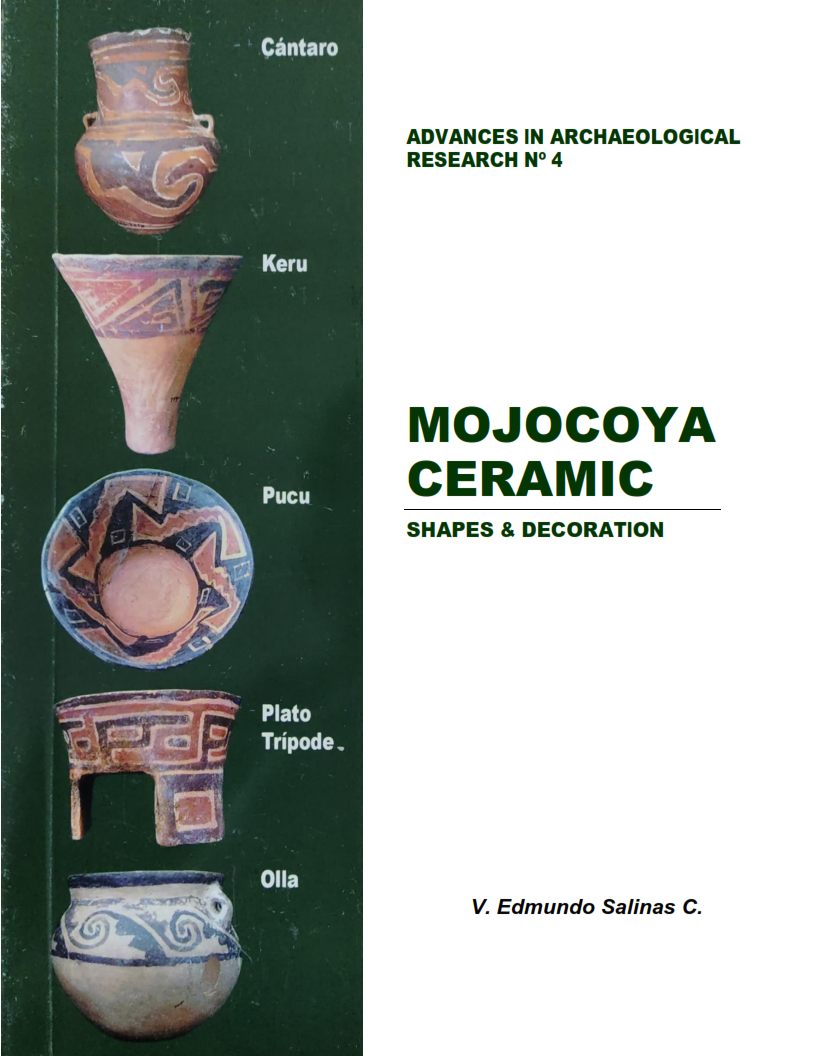
MOJOCOYA CERAMIC – SHAPES & DECORATION
V. Edmundo Salinas C. – Compilador
Pre-Hispanic cultural remains (that have been preserved through time) are archaeological testimonials that allow us to understand the developmental processes of the ancient inhabitants of this region (currently the Department of Chuquisaca). Their settlements, military fortifications, systems of agricultural production (such as, agrarian terraces, irrigation systems, and storage rooms) rock art, funerary monuments, ceramics, lithics, among other remains are part of the cultural heritage of Chuquisaca. They are also the object of study for the social sciences, in particular archaeology. Archaeology is undoubtedly linked to the social sciences.
Cultural developmental processes in the region are diverse, evidenced from as early as the formative, that is to say 3,600 years ago. Man begins to stop being hunters and start to become sedentary, capable of developing technologies in different areas (agriculture, livestock, architecture, textile, pottery, etc.).
It is clear, that the developmental patterns in the valley zones were more reserved and locally focused when compared to the altiplano zone, despite continuous cultural interaction between the valley and the altiplano societies. This assertion is largely based on the limited space for agricultural production in the valleys. With this restricted capacity, it is believed valley societies could not generate a surplus that would enable political-economic expansion.
Yet, the modes of development achieved were sufficiently vigorous to achieve outstanding specialization in certain technologies.